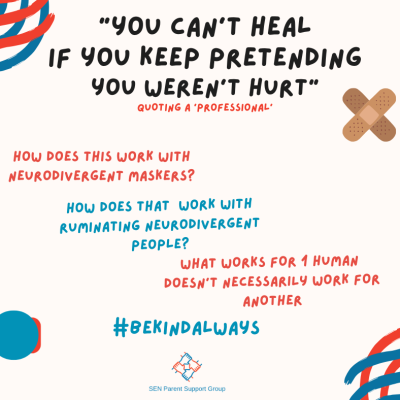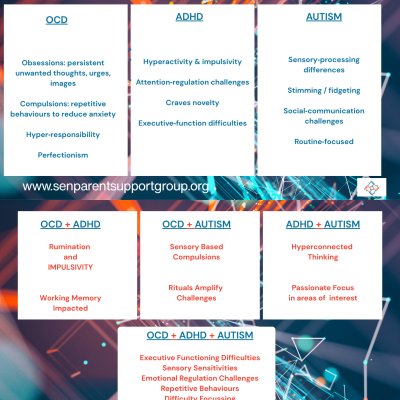
In the SEN Parent Support Group, we talk a lot about children’s behaviour not as something to “fix”, but as communication. What we don’t talk about nearly enough is the adult side of the equation.
Because here’s the truth many of us were never told:
Children borrow regulation from adults. If we are overwhelmed, they will be too.
And that isn’t a moral failing. It’s biology. It’s lived experience. It’s the nervous system doing what nervous systems do.
But when you’re parenting a neurodivergent child especially in a system that is under-resourced, dismissive, or outright hostile your own stress response can be activated dozens of times a day. That has a real impact on how you show up in those hard moments.
This blog is here to offer compassion, not criticism. To name what’s happening, not shame it. And to give you practical, realistic ways to support yourself so you can support your child.
Common Adult Stress Responses (And Why They Happen)
When we’re overwhelmed, exhausted, or running on survival mode, our brains move into protection. That can look like:
Rushing to Control
Your child’s behaviour escalates and your instinct is to stop it now. Not because you’re harsh
but because your nervous system is screaming “danger”.
Raising Your Voice or Using Threats
You’re not trying to intimidate. You’re trying to regain a sense of safety and order.
Taking Behaviour Personally
When a child shouts “I hate you”, it hits the part of you that’s already stretched thin.
Over-Relying on Consequences
Punishment becomes the default when you’re out of capacity and out of tools.
Losing Consistency
You switch strategies because you’re firefighting, not because you lack boundaries.
None of this makes you a bad parent. It makes you a human parent.
What Helps Instead (And Why It Works)
These aren’t “perfect parent” strategies. They’re nervous-system strategies small shifts that help you stay grounded so your child can borrow your calm.
Pause and Regulate Yourself First
A dysregulated adult cannot regulate a dysregulated child.
Even a 5‑second pause is powerful.
Name What’s Happening
“This behaviour is communication, not an attack.”
This reframes the moment and reduces the emotional sting.
Lower Demands Before Raising Expectations
Support comes before skill-building.
A child in distress cannot learn.
Respond, Don’t React
Calm responses teach safety. Safety teaches regulation. Regulation teaches behaviour.
Real-Life Examples Parents Will Recognise
1. The Park Meltdown
Your child refuses to leave. People stare. Your heart races.
You want to shout, “Stop it now!”
Reframe:
“Leaving is hard. I hear you. Let’s take one more breath together.”
2. The Morning Chaos
Your child won’t get dressed. You’re late. Your anxiety spikes.
You threaten to remove the tablet for a week.
Reframe:
“Getting ready feels big today. Let’s start with socks together.”
3. The “I Hate You” Moment
Your child screams hurtful words. You feel attacked.
You snap back.
Reframe:
“You’re upset. I’m here.”
4. The Sibling Clash
Your child lashes out physically. You’re exhausted.
You default to punishment.
Reframe:
“You were overwhelmed. We’ll talk when we’re both calm.”
5. The Homework Battle
You’ve tried three strategies. Nothing works.
You give up in frustration.
Reframe:
“Homework feels hard tonight. Let’s take a break and come back with a plan.”
The Heart of It All
You are not meant to parent in isolation.
You are not meant to regulate through exhaustion.
You are not meant to carry the weight of unmet needs yours or your child’s alone.
Supporting behaviour starts with supporting you.
Your nervous system matters.
Your overwhelm is valid.
Your calm is powerful.
Your child learns regulation through connection, not perfection.
And in this community, you never have to pretend you’re fine when you’re not. We see you. We get it. And we’re here to walk this with you. Join us here where we can support you getting your child or young persons needs acknowledged and supported.


Communicating With School
- LETTER: To School When They Enforce a Part Time Timetable Without Acknowledging Need
- LETTER: To School For Referral To OT/SALT/EP as Part of APDR Cycle
- RESOURCE: Eating Disorders and School Adjustments
- LETTER: Failure To Make Reasonable Adjustments Discrimination
- LETTER: Requesting Reasonable Adjustments
All Things EHCP
- Annual Review During Your Appeal?
- LETTER: To LA When They Fail to Give extra 15 Days After Their Amendments
- LETTER: To LA When They Use Specialist Advisory Service (SAS) INSTEAD of Educational Psychologist During EHCPNA Process
- LETTER: LA Failure To Notify If Issuing the plan
- RESOURCE: Moving Local Authorities
Attendance, Exclusions & Sanctions
Complaints
- LETTER: Formal Complaint for RTC Pause
- LETTER – Enforcing Interim Education S43 with LA + Escalation Letter + Tribunal Request
- LETTER: To School When Whole School Approach To Adjustments Is Not Applied Consistently (IEP or EHCP)
- RESOURCE: LGO Outcomes
- LETTER: Right to Choose Rejection 3 Step Complaints Letters