No Comments
~3 September 2026
What do we do, how do we do it and how can it benefit you? 5 min Read with hyperlinks.

What do we do, how do we do it and how can it benefit you? 5 min Read with hyperlinks.
Early Help is usually the first tier of support offered when a child or family is struggling. It isn’t a safeguarding measure; it’s a voluntary, preventative service designed to identify needs early and bring professionals together.
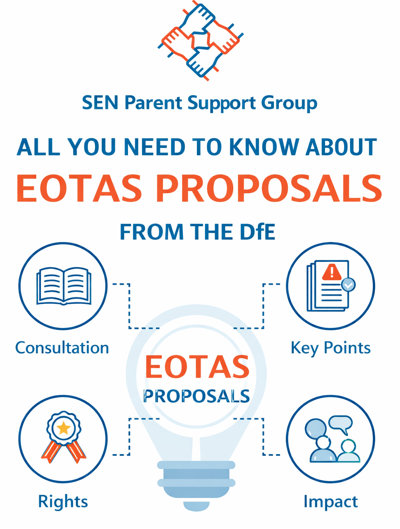
Right now, EOTAS is a direct Local Authority responsibility written into Section F of the EHCP. Under the new model, a school becomes the accountable body even if the child cannot attend that school. The DfE suggests this would “generally be a specialist setting,” not the school where the child previously experienced trauma or placement breakdown.
The Department for Education has released new inclusion guidance, and understandably it has created a lot of discussion. Whenever something new appears, families worry about what it means for their children, and professionals want to understand how it fits with the duties they already work under. The most important point to hold onto is this: guidance...
It is one of the strongest tools parents have when challenging discrimination by schools, LAs, health bodies, transport, leisure providers, clubs, and any organisation delivering a “service” or “public function”.
Friendships are often described as a “normal” part of childhood - something that just happens, something every child should have, something schools assume will fall into place. But for many neurodivergent (ND) children and young people, this simply isn’t the reality. Parents know it and children absolutely do feel it. Professionals suspect it but sadly nobody...
When a school refuses to request an Education, Health and Care Needs Assessment (EHCNA), it can feel personal, dismissive, and deeply frustrating. But in reality, refusals almost always fall into one of three categories and once you know which one you’re dealing with, you can take clear, strategic next steps. Here are the three reasons a...
We are seeing a sharp rise in bullying, school‑based trauma, and mental health crises in neurodivergent children as communicated in our group by SEND Parents - and a rise in CAMHS refusing referrals because children “don’t meet criteria”. Here is what the data shows, what this means for ND children, and what you can do if...
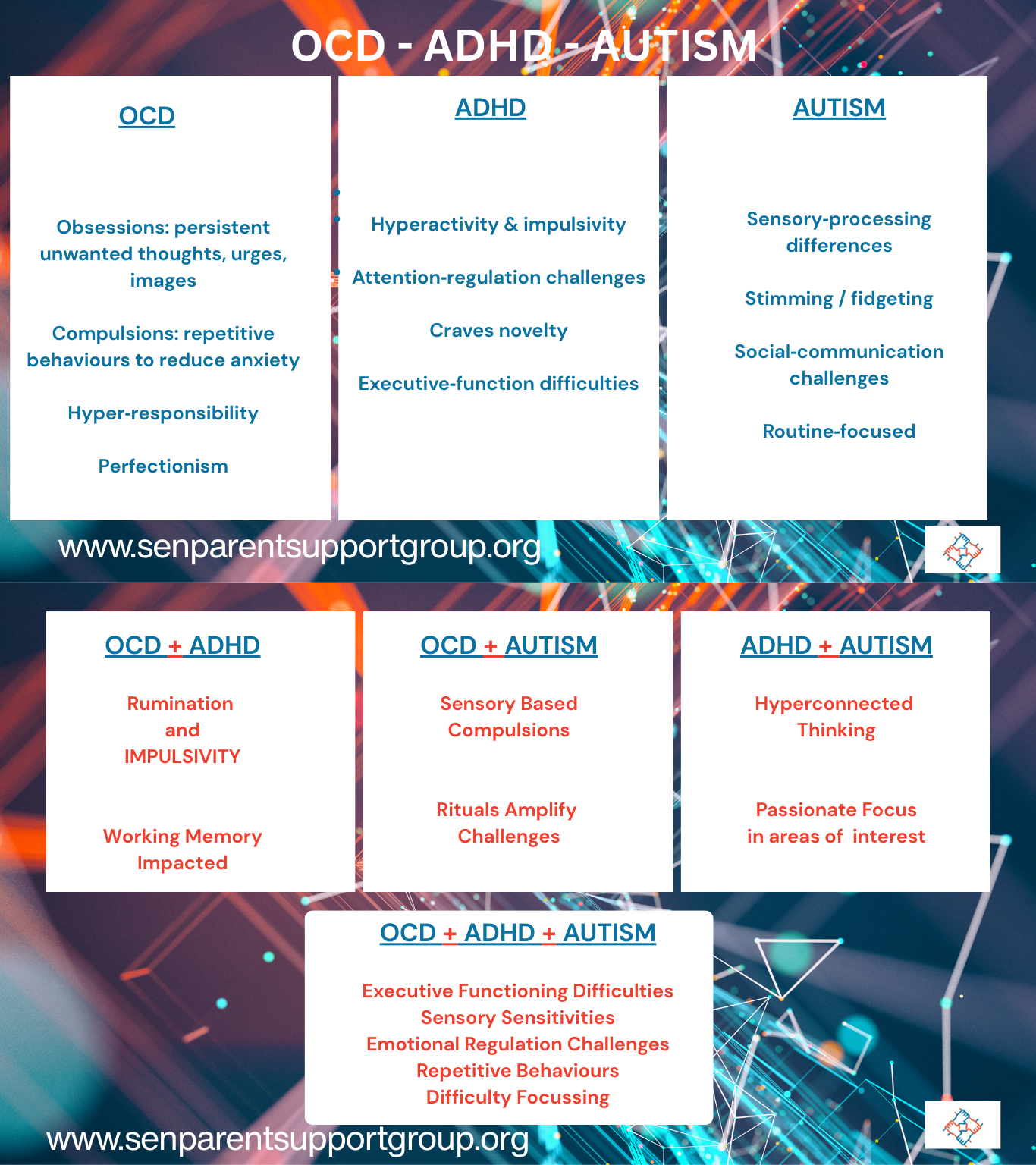
For many families in our community, the journey toward understanding their child’s needs is anything but straightforward. CYP rarely present in neat diagnostic boxes, and when traits from OCD, ADHD, and Autism overlap, the picture becomes even more complex. This overlap can lead to misinterpretation, delayed identification, and support plans that don’t quite fit what the...
The Dynamic Support Register is a statutory tool used by local areas to identify autistic children and young people (and adults) who are at risk of crisis, hospital admission, or placement breakdown.