Being referred to Early Help or placed on a Child in Need (CIN) plan can feel daunting, but in practice these pathways often give families something they rarely get:
✔️coordinated oversight
✔️documented needs
and a
✔️multi‑agency record of what isn’t working.
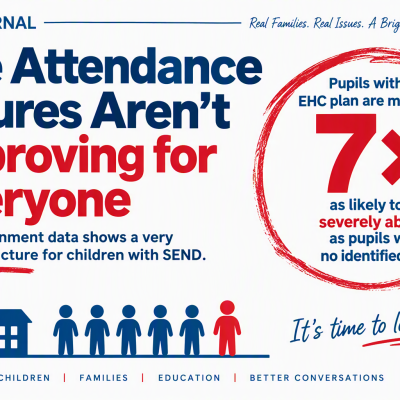
For children with SEND, this can become powerful evidence that supports reasonable adjustments in school and strengthens the case for an Education, Health and Care Needs Assessment (EHCPNA). Check out this useful visual on support prior to EHCPNA
Early Help is usually the first tier of support offered when a child or family is struggling. It isn’t a safeguarding measure; it’s a voluntary, preventative service designed to identify needs early and bring professionals together.
For SEND families, Early Help can capture unmet needs that schools have not fully recognised, patterns of distress, escalating behaviour, or barriers to attendance. The assessment process requires professionals to describe what the child needs, what has been tried, and what outcomes have or haven’t been achieved. Parents should know that everything recorded here becomes part of the child’s evidence trail. If reasonable adjustments are missing, inconsistent, or ineffective, Early Help is often the first place this is formally acknowledged.
A CIN (Child in Need) plan sits one tier higher and is statutory. It is used when a child’s development or health is being significantly impacted and coordinated intervention is required. CIN plans are multi‑agency, reviewed regularly, and require professionals to commit to actions.
For SEND families, this can be the first time a school is required to demonstrate what they are doing, how often, and with what impact. CIN plans can highlight gaps in provision, lack of specialist input, or repeated patterns of distress that indicate unmet need. Parents should know that CIN documentation is valid evidence for an EHCPNA because it shows that despite coordinated intervention, the child’s needs remain significant and require specialist assessment and provision.
Both Early Help and CIN plans can directly support reasonable adjustments in school. When professionals agree that a child’s needs are impacting attendance, behaviour, learning, or wellbeing, the school is expected to respond. Adjustments such as reduced timetables, sensory breaks, safe spaces, differentiated work, or specialist strategies can be written into the plan. If the school does not implement them, the review meetings provide a formal record of this. If adjustments are implemented but still insufficient, that too becomes evidence of the need for statutory EHCP assessment.
This is particularly relevant now.
The Department for Education’s new absence communication and inclusion guidance places a stronger duty on schools to investigate the reasons behind absence, including unmet SEND needs.
Schools must now demonstrate proactive steps to understand and support children whose attendance is affected by anxiety, behaviour, or health conditions. As a result, referrals to Early Help and CIN are likely to increase. Schools will be encouraged to escalate earlier when attendance patterns suggest underlying needs, and local authorities will expect multi‑agency involvement before attendance enforcement is considered.
For SEND families, this means more children will enter Early Help or CIN pathways because their absence is recognised as a sign of unmet need rather than non compliance. The new SEND system is moving towards national standards, and Early Help/CIN documentation will increasingly be used to show whether a school has followed those standards. If a child is on Early Help or CIN and the school has not delivered the expected adjustments or interventions, that becomes powerful evidence that the child requires statutory assessment.
Parents should know that none of these processes replace an EHCPNA at this time and that they sit alongside it. In fact, they often strengthen it. When a child is on Early Help or CIN, the local authority already has evidence that needs are complex, persistent, and affecting daily life. The documentation shows what has been tried, what has failed, and what professionals believe is required. This can significantly support the argument that the child needs statutory assessment and specialist provision.
The reforms strengthen the requirement for parent involvement in decision making. Early Help and CIN meetings are now part of the evidence of parental concern, parental requests, and parental reports of need. This matters because the new SEND system is tightening the criteria for EHCPNA but parental evidence within multi‑agency documentation remains a protected route to assessment.
The key message for our SEND parents is that Early Help and CIN are not threats – they are evidence‑building tools. They create a paper trail that shows the reality of your child’s needs, the gaps in support, and the impact on their wellbeing and education. Used well, they can accelerate reasonable adjustments, improve communication between services, and feed directly into a robust EHCPNA request.
We hope you found this useful? Please do review the hyperlinked resources for full comprehension. Below are some blogs which might help your current situation.
Section 19: When Education Must Be Secured Outside of School – SEN Parent Support Group
TRAINING: CPD ACCREDITED TRAINING – SOCIAL CARE – SEN Parent Support Group
.If you would like to join others in this situation then please do join us here. We offer unprecedented support to all of our group parent members and look forward to supporting you through your next steps.
If your situation is complex and you require more 1:1 support then book here: How We Help SEN Parents | Support, Training & Resources


To become a member of our resource hub plus which gives you instant access to over 450 – letters, templates, visual info graphics, timelines and assessments plus our infamous CPD training SEND Mastered which is a 42 module training platform for our SEND Parents which empowers you to advocate stronger, more fiercely to obtain better results for your child or young person. Click here: A sample of which is below ⬇️ for ease of reference.

Understanding SEND
- EOTAS & AP: The real legal tests and current to SEND reform comparison
- LETTER: Post 16 SECTION 19 – Formal Letter to LA or Stage 1 Complaint
- GUIDANCE: SEND Need Descriptors For IEP via APDR
- QUICK GUIDE: Example SEND Graduated Response (How APDR is approached In Schools)
- RESOURCE: Executive Functioning
Communicating With School
- LETTER 4: To School following receipt of Formal Attendance Letter
- LETTER 3: To School Based on 3rd Attendance Letter Received
- LETTER 2: ATTENDANCE RESPONDING TO (BELOW 90% ATTENDANCE LETTER)
- LETTER 1: Responding to EARLY AWARENESS Letter from School (before 90% absence)
- LETTER: To School Requesting Reasonable Adjustment for Mobile Phone
Attendance, Exclusions & Sanctions
- Welsh Exclusions: What Happens, What You Can Ask For, and What Schools Must Do
- LETTER 1: Responding to EARLY AWARENESS Letter from School (before 90% absence)
- LETTER: Responding To Prosecution s444
- GUIDANCE: Exclusions Fixed Term or Permanent
- LETTER: To School When They Fail To Progress After Part Time Time-Table
Complaints
- LETTER: To LA – SEND Accountability Under S23 Children Act 2004
- LETTER: To LA When They Refuse to Reassess
- LETTER: Stage 1 LA on Grounds of Maladministration During EHCP NA Process
- LETTER: Post 16 SECTION 19 – Formal Letter to LA or Stage 1 Complaint
- LETTER: To School Requesting Reasonable Adjustment for Mobile Phone